Housing bureausTourist informationAccomodationTourist routesAdventure travelArticles![]() The heart of Sukhum is its waterfront. Before the Revolution it was... Tourist placesAboutPhoto |
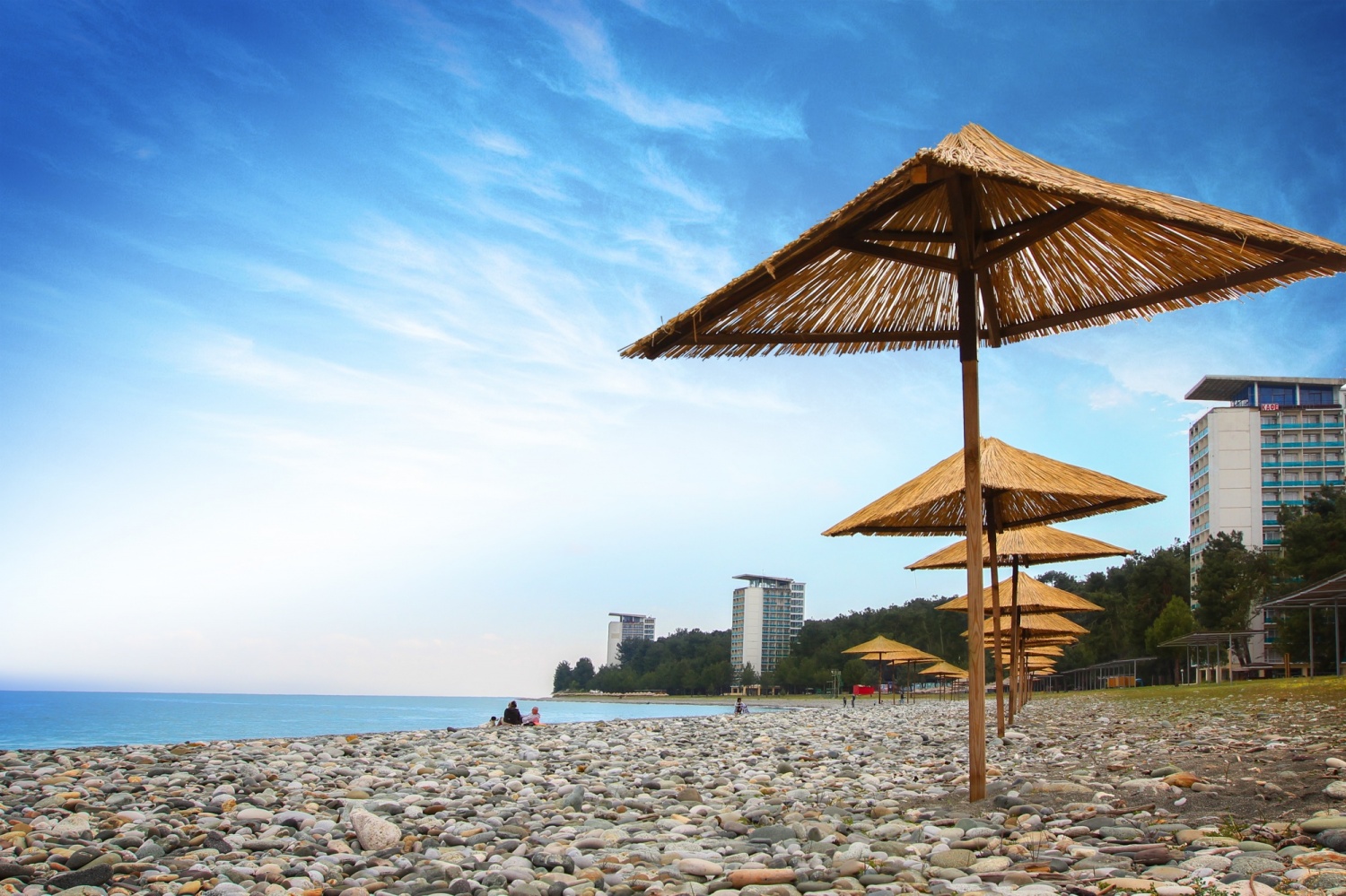
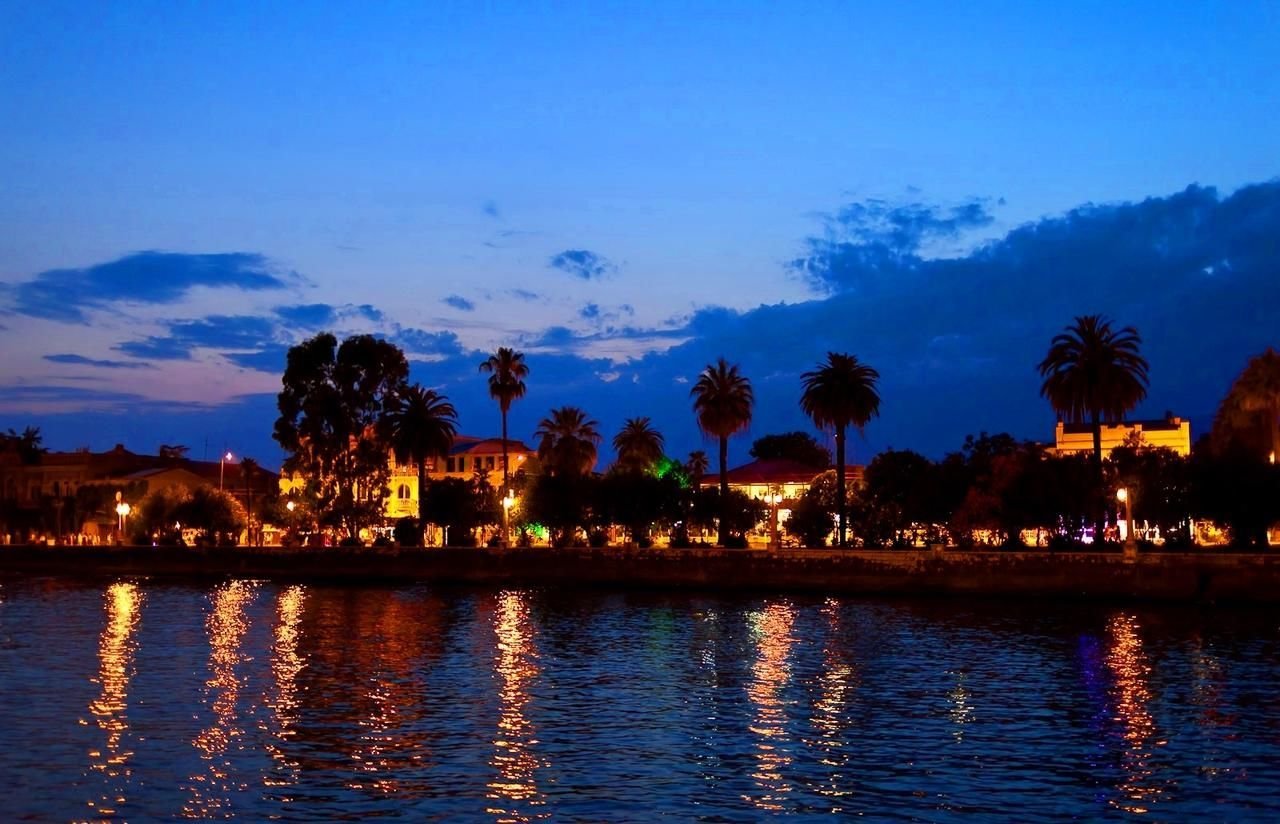
The Sukhum WaterfrontThe heart of Sukhum is its waterfront. Before the Revolution it was called the Mikhailovskaya waterfront, and now it is the Makhadzhirov waterfront. It is a winding street spreading along the city center from Mayak residential district to the Red Bridge.
The waterfront was first mentioned in 1810. The street stretched from the East gate of the Sukhum fortress to where the Basla river fell into the sea. That is the time when the first buildings appeared along the seaside, they were mostly coated with clay and covered with lime. Some time between 1820-1839 the Black Sea Front was founded (the line of Russian coastal forts) and the walk became part of the road connecting two forts in Bombora and Dranda villages. It was home to a market and the first few shops and houses. After the city was completely destroyed during the Russo-Turkish war, the city began its rebirth from the walk and it became the first street of the new Sukhum. The most enterprising and educated citizens came here to build new hotels and houses. Every building along the walk has its own history and architectural façade and is a place of cultural and architectural interest. For instance, the beautiful brick house with the round tower across from the Penguin café was built by the Ksandopulo brothers. It was initially connected with the City Club and the library where members of the City Council used to gather. The staircase that runs from the café to the sea used to lead to a postal berth. Across from the entrance to the sea port with the Apra restaurant next to it, there is another interesting brick building. It was built by Wolfenson, a merchant from Batumi and was made into a luxurious (according to its time) hotel called Russia. Next to the Narta restaurant is a gorgeous mansion where the White Sail hotel and restaurant are currently located. The mansion was built in 1901 by the merchant Tsiripov, and the architectural project was created by the architect Anisimov. The building of the Abkhazia hotel was built in 1935. For decades it has been the main landmark of the city. In 1985 the building suffered from fire. Currently it stands half-destroyed, waiting to be restored. Another beautiful building stands next to it, the Oriental hotel built in 1908, it used to belong to the Georgian merchants Gvalia and Chavchanidze. In 1932 it was renamed into Tkvarcheli. It was put under reconstruction just before the war of 1992-1993 which made the works impossible. Just like the neighboring Abkhazia, the hotel is waiting to be rebuilt. The Grand Hotel and the Aloisi Theatre, both based on architectural projects of the architect Sarkisov, used to stand where today's Abkhazian State Drama Theatre is located. Both buildings belonged to the rich and famous silkworm breeder, French citizen Ioakim Aloisi. The so-called Aloisi villa, a house on the road leading to the Sukhum mountain, is another architectural landmark which is, unfortunately, decaying. The waterfront underwent a major reconstruction in 1951, and the Grand Hotel and the Aloisi Theatre were destroyed to make way for the Abkhazian State Samson Chanba Drama Theatre. The governmental buildings where the Cabinet of Ministers and the Abkhazian Parliament reside were built in the 1960s and used to host the Oblast Committee and the Sukhum Party and Komsomol Committee. The Sukhum waterfront is busy any time of year. It is the favorite place for taking walks among the citizens and the tourists. It's impossible to visit Sukhum and avoid taking a walk down the street, having a cup of coffee in one of the street cafés, admiring the sea and breathing in the aroma of the blossoming trees. Welcome to Sukhum!
|
|