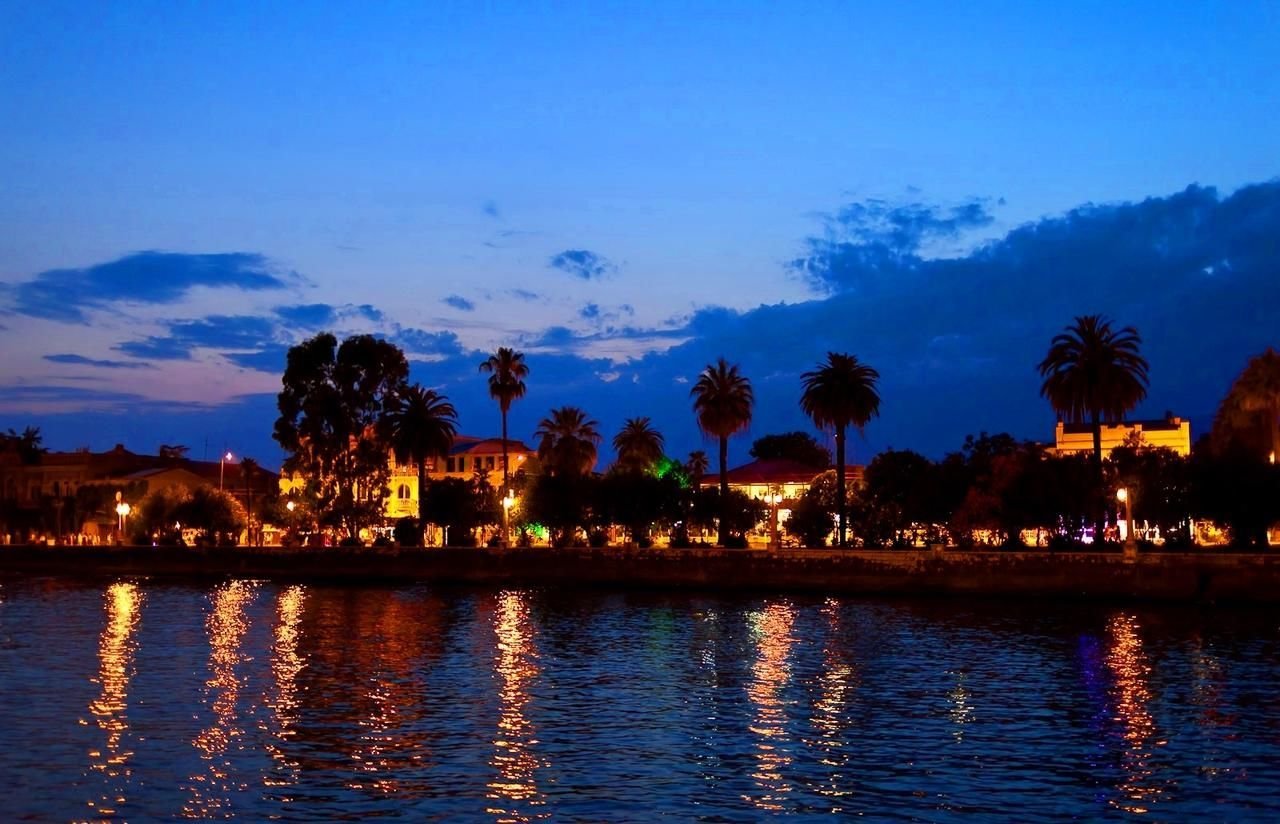
Housing bureausTourist informationAccomodationTourist routesAdventure travelArticles![]() The heart of Sukhum is its waterfront. Before the Revolution it was... Tourist placesAboutPhoto |
From the earliest of times, a distinctive culture began evolving in Abkhazia. The warmth and mildness of the climate and the fertility of the land had defined the Abkhaz way of life. Thus, the ancient Abkhaz were mainly preoccupied with farming, cattle breeding, hunting, fishing and handicrafts. While defending their land from enemy attacks or fighting wars, the Abkhaz also developed combat and weapon-making skills. Abkhazian culture is based on a folk ethical principle called apsuara, which means "being Abkhazian". Professor Sh. D. Inal-Ipa, a well-known Abkhazian ethnologist, defines apsuara as a traditionally shaped way of expressing the national conscience, an unwritten code of ethnic lore that describes the Abkhaz people's entire system of customs, beliefs and principles. Abkhaz sagas and legends demonstrate the people's archaic beliefs about the Creation of the World and the role of the gods. Abkhaz Nartic sagas tell the story of the life and heroic deeds of the Narts, a hundred brothers and their mother, Satanaya-Guasha.
Abkhaz is the official language of the Republic of Abkhazia and one of the most ancient languages in the world. Together with Abazin, Adygean, Kabardian and Circassian languages, it belongs to the Abkhaz-Adyg group, which today encompasses several million people. As the common Abkhaz language was being formed, several dialects developed due to the feudal division of the country. Abkhaz literary language evolved actively during Soviet time, as the language of the nation underwent a formative stage. Over a relatively short time, the vocabulary of the written language expanded greatly by borrowing from the native dialects and foreign languages.
Abkhaz Folklore Abkhazian culture is rich with folk poetry and songs, dance and music. Abkhazian folk songs are a combination of vocal melody and chanting. Ancient pagan songs survive to this day, along with work songs, ritual songs, fairy tales, legends, myths, sagas, sayings and proverbs.
Music and Dance Traditional Abkhazian musical instruments include strings, woodwinds, and percussion. Among the most popular string instruments is the ap'hyartsa, a two-stringed instrument with a narrow spindle-shaped frame, played with a bow and usually carved from alder wood. The ayumaa is a triangular harp with 14 horsehair strings (ayumaa means "two-handed" because the musician holds it on one knee while playing with both hands). Dancing is the most popular form of folk performance in Abkhazia. There are several professional dance troupes in the country and several choreography studios for children. The troupes perform folk dances, ritual dances with daggers and burkas (traditional coats with high, squared-off shoulders), and other traditional Caucasian dances. Clothing Traditional clothes are an important element of Abkhazian culture. In the past, people dressed in accordance with their occupation, and divided their clothes into everyday clothing, clothes for festive occasions, and ritual dress. The traditional women's costume consisted of several key items: a dress with a short or long tunic coat worn over it, a shirt, two underskirts, a pair of trousers, and a hat or a head scarf. A decorative sash, worn around the waist on top of all the layers, was often a genuine work of art. The short tunic coat was usually made of homespun broadcloth or velvet; it fit tightly in the chest area and widened below the waist. The alabasha, a tough wooden staff with a metal foot and a hook on top, was a symbolic element of traditional appearance. A walking stick that doubled as the simplest weapon, it would also serve as a sort of a "soap box" for someone about to make a speech: if an elder dug his staff into the ground and leaned on it, it was a sign that he was about to speak. |
|